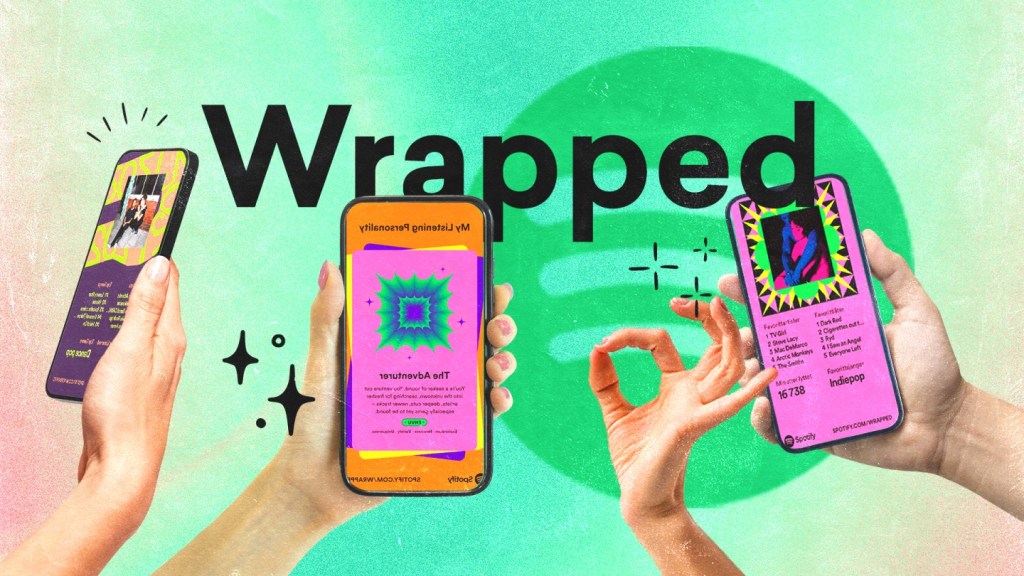
Every December, the same trend will be set off on social media. People scramble to share their Spotify Wrapped, showing how many minutes of music they have listened to this year, who their favorite singer is, what kind of “listening personality” they belong to, and so on. This is not an accident, but a well-designed marketing miracle. Spotify Wrapped brings consumers a well-designed marketing miracle. The core reason why he can get out every year is that it makes every user feel that this content is specially made for them.
What exactly is personalized marketing?
Personalized marketing refers to conveying exclusive content or information to each user based on their behavior, preferences and data, rather than saying the same thing to everyone. The logic of traditional marketing is similar to spreading the net, such as making an advertisement and putting it on as many people as possible. But the logic of Spotify Wrapped’s personalized marketing is completely opposite. It uses data to find the corresponding person and conveys the right information at the right time. This phenomenon has changed from a product function to a network culture.
Why does Spotify Wrapped work?
First, it tells your own story with your own data.
There is no general word in Spotify Wrapped. For example, you have listened to 47,382 minutes of music this year, you are one of the top 0.1% of Taylor Swift listeners in the world, etc. Every sentence is unique to you and cannot be copied by others. This high sense of exclusivity makes users naturally have emotional resonance, because this content is about consumers themselves.
Second, it turns the data into a story worth sharing.
Pure data is cold, but Spotify Wrapped wraps the data into an annual review with personality and visual impact. After reading it, users not only feel emotional, but also want to send out this story. And sharing Spotify Wrapped is to show your own taste and personality to some extent. Spotify turns users into voluntary communicators.
Third, it creates individual uniqueness in the sense of collective participation.
Wrapped goes online at the same time every year, forming a sense of ceremony of national participation. But everyone’s results are completely different. This differentiated experience satisfies the user’s sense of belonging and uniqueness at the same time.
What can brands learn from Spotify Wrapped?
With the success of Spotify Wrapped, I have summarized two categories of marketing logic that are worth learning from all brands. First of all, Spotify uses consumer data to tell stories. Many brands have a large amount of user data, but it is only used for internal decision-making. Spotify Wrapped tells us that returning data to users so that users can see that their behavior is recorded and presented can create value in itself. The second is the design of personalized content that can be disseminated. The reason why Spotify Wrapped can spread spontaneously is that it is designed for sharing itself. It has exquisite visuals, one-click screenshots, and adapts to the size of various platforms. If personalized content can be communicative at the same time, the marketing effect will be exponentially amplified.
Conclusion: Personalization is the default language of future marketing.
In the era of information overload, users are more and more immune to general advertisements. What can really capture attention is those extremely personalized content. Spotify Wrapped reminds us every year that the best marketing is not the brand talking, but making users feel understood. When a brand can talk to you with your own story, you will not only remember it, but also help it spread. This is the real power of personalized marketing.
James Chen
04/07/2026
 James Chen | Marketing Notes
Leave a comment